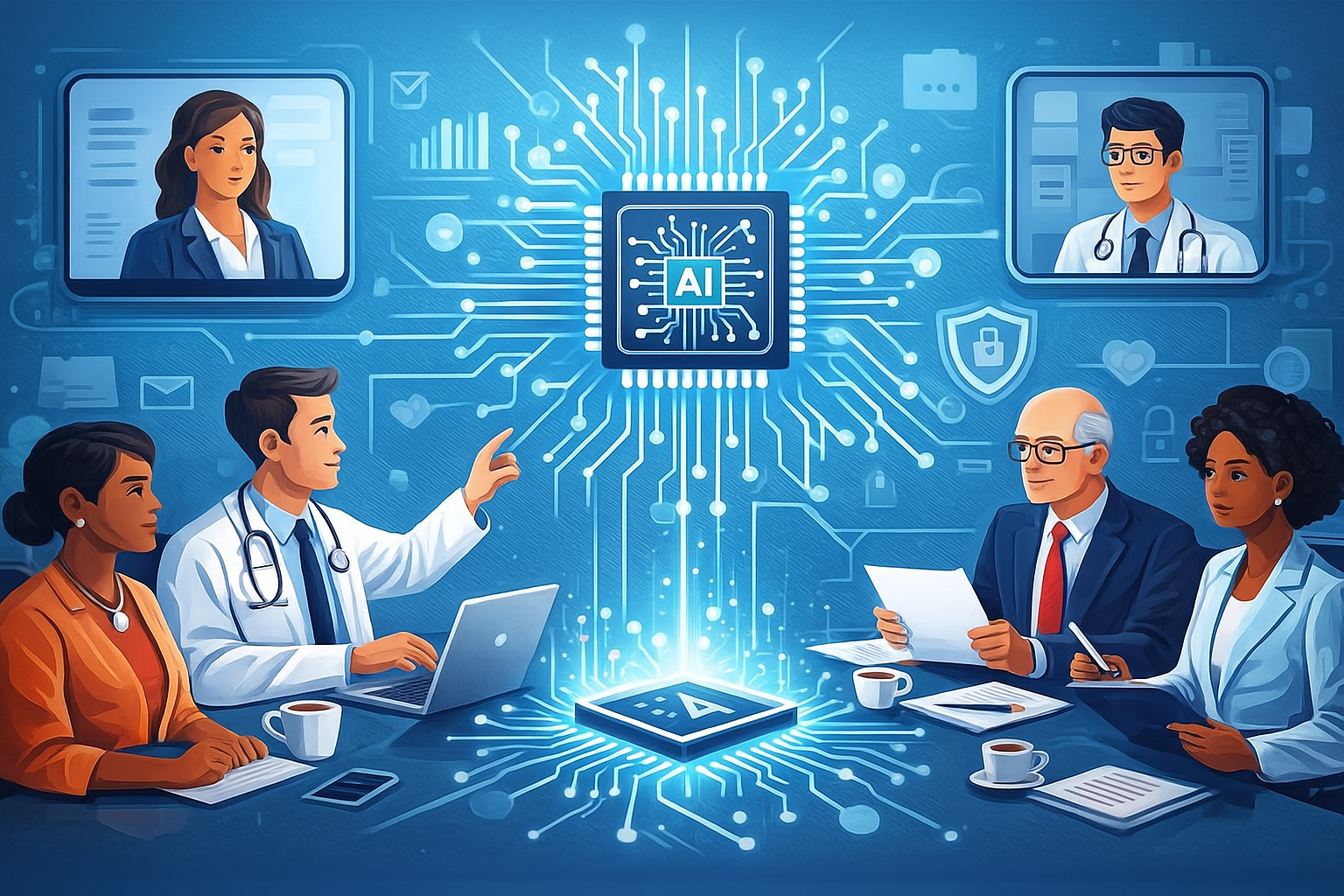
Artificial Intelligence (AI) is rapidly transforming healthcare — from early disease detection to personalized treatment plans and automated hospital workflows. But behind every AI innovation is a complex network of stakeholders who influence how this technology is developed, regulated, used, and trusted.
Understanding these stakeholders is essential for anyone working in healthcare, technology, research, policy, or entrepreneurship.
Who Are the Key Stakeholders in AI in Healthcare?
1. Healthcare Providers (Doctors, Nurses, Hospitals)
Healthcare professionals are primary users of AI tools.
Their roles include:
- Identifying clinical needs AI can solve
- Testing AI systems in real-world settings
- Ensuring technology improves patient care
- Providing feedback to developers
Highlighted Point:
➡️ Clinicians ensure AI remains clinically relevant, safe, and beneficial.
2. Patients and Caregivers
Patients benefit directly from AI through improved diagnosis, monitoring, and personalized treatment.
Their contributions include:
- Providing data for training AI models
- Giving informed consent
- Evaluating trust, usability, and comfort
Highlighted Point:
➡️ Patient trust determines the success and acceptance of AI technologies.
3. AI Developers and Tech Companies
These include startups, AI researchers, data scientists, and major tech firms.
Responsibilities:
- Building accurate and ethical AI models
- Ensuring transparency and reliability
- Developing user-friendly clinical interfaces
Highlighted Point:
➡️ Developers shape how AI learns, behaves, and evolves.
4. Healthcare Administrators and Management
Hospital managers and decision-makers adopt AI systems based on cost-effectiveness and workflow integration.
They focus on:
- Budget allocation
- Implementation strategy
- Staff training
- Data infrastructure
5. Regulatory Bodies & Government Agencies
Examples: FDA, CDSCO (India), EMA.
Their responsibilities:
- Setting safety standards
- Approving medical AI tools
- Monitoring compliance and patient safety
Highlighted Point:
➡️ Without regulation, AI in healthcare could pose legal, ethical, and privacy risks.
6. Insurance Companies & Payers
These include government health schemes and private insurers.
Roles:
- Determining reimbursement policies
- Evaluating cost-benefit impact
- Encouraging adoption of AI-driven diagnostics
7. Data Providers & Health Information Systems
Electronic Health Record (EHR) systems, labs, imaging centers, and wearable device companies.
Their contributions:
- Supplying high-quality clinical data
- Ensuring data privacy
- Enabling smooth integration with AI systems
8. Academic Institutions & Research Organizations
They study the effectiveness, safety, and long-term impact of AI on patient outcomes.
Research areas include:
- AI ethics
- Bias reduction
- Model explainability
- Clinical trials for AI tools
9. Ethical & Legal Experts
These stakeholders help define the ethical boundaries of AI.
Responsibilities:
- Ensuring fairness
- Protecting patient rights
- Preventing discrimination or bias
Why Stakeholder Collaboration Matters
AI in healthcare succeeds only when all stakeholders work together. Collaboration ensures:
- Ethical development
- Clinical accuracy
- Wider adoption
- Patient safety
- Transparency in decision-making
Highlighted Point:
➡️ AI in healthcare is not just a technological advancement — it is a shared responsibility.
Frequently Asked Questions (FAQ)
1. Why are stakeholders important in AI in healthcare?
Because AI affects patient lives, medical decisions, and hospital processes. Stakeholders ensure AI is safe, reliable, ethical, and beneficial.
2. Who is the most important stakeholder?
All stakeholders are important, but patients are at the center because AI ultimately impacts their health and well-being.
3. What challenges do stakeholders face?
- Data privacy
- Ethical concerns
- High implementation cost
- Technical errors or bias
- Lack of trust or awareness
4. How can hospitals adopt AI effectively?
By involving all stakeholders — clinicians, IT teams, administrators, and patients — during planning, testing, and training.
5. Is AI replacing doctors?
No. AI is a support tool that helps doctors make faster and more accurate decisions. Human expertise remains essential.
Conclusion
AI in healthcare is reshaping the future of medicine, but its success depends on the collective efforts of multiple stakeholders — from patients and doctors to regulators and developers. When these groups collaborate, AI becomes safer, more effective, and more accessible.
Latest Post
- World Oral Health Day 2026: Importance of Oral Hygiene for a Healthy Life
- Posterior Hip Dislocation: Causes, Symptoms & Treatment
- Dog Dislocated Hip: Symptoms, Treatment & Care
- Dislocated Hip Symptoms: Early Signs, Pain Patterns, and When to Seek Medical Help
- ICD 10 Code for Benign Prostatic Hypertrophy: Complete Coding & Clinical Guide