Posterior hip dislocation is a serious orthopedic emergency that usually occurs after a high-impact injury. Although it is not very common, posterior hip dislocation can cause severe pain, long-term complications, and mobility problems if not treated on time. Understanding posterior hip dislocation, its causes, symptoms, diagnosis, and treatment options is essential for early care and better recovery.
What Is Posterior Hip Dislocation?
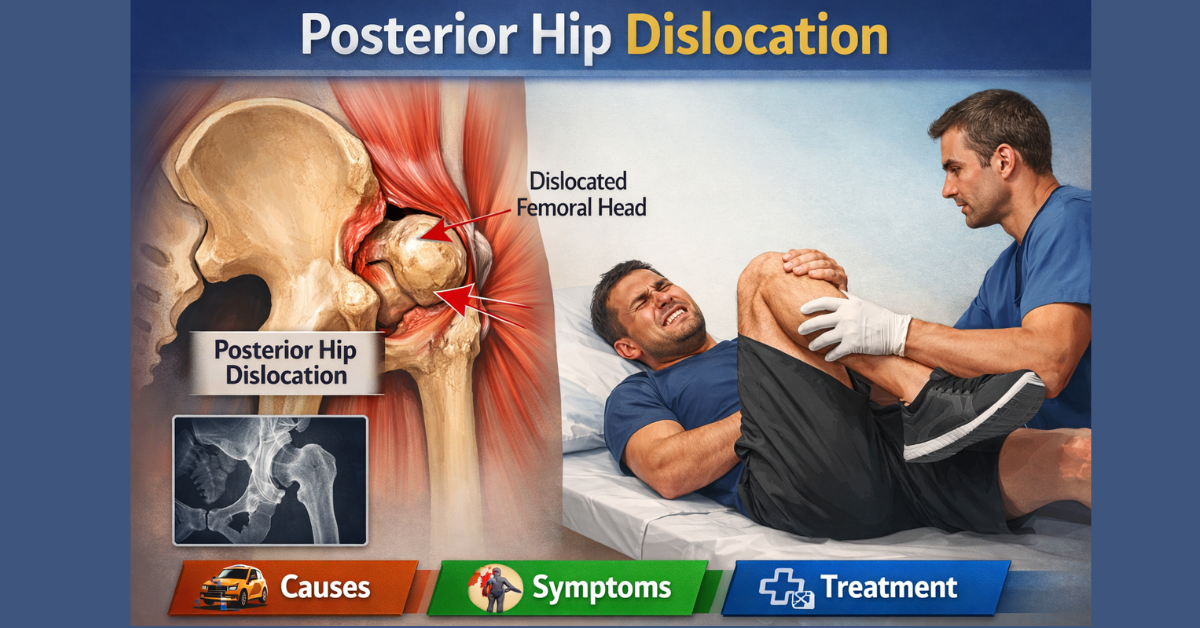
Posterior hip dislocation occurs when the head of the femur (thigh bone) is forced out of the hip socket (acetabulum) toward the back of the body. In most cases, posterior hip dislocation happens due to high-energy trauma such as road traffic accidents or falls from a height.
Among all hip dislocations, posterior hip dislocation accounts for nearly 90% of cases. Because the hip joint is strong and stable, posterior hip dislocation usually indicates a significant injury.
Causes of Posterior Hip Dislocation
hip dislocation is most commonly caused by severe trauma. Some of the common causes include:
- Road traffic accidents (especially dashboard injuries in car crashes)
- Falls from height
- Sports injuries involving sudden force or impact
- Industrial or workplace accidents
- Violence or physical assault
In car accidents, hip dislocation often occurs when the knee hits the dashboard, forcing the femur backward and dislocating the hip joint.
Signs and Symptoms of Posterior Hip Dislocation
The symptoms of hip dislocation are usually severe and appear immediately after the injury. Common signs include:
- Intense hip pain
- Inability to move the affected leg
- Shortened leg length
- Hip held in a flexed, internally rotated position
- Swelling and bruising around the hip
- Numbness or tingling if nerves are affected
In hip dislocation, the affected leg often appears bent, turned inward, and shorter than the other leg. This visible deformity is a key sign doctors look for during examination.
Diagnosis of Posterior Hip Dislocation
Prompt diagnosis of hip dislocation is critical to prevent complications. Doctors usually diagnose hip dislocation using:
- Physical examination
- X-ray of the pelvis and hip
- CT scan (to detect fractures or joint damage)
- MRI (in selected cases to assess soft tissue injury)
Imaging helps confirm hip dislocation and identify associated fractures of the acetabulum or femoral head.
Why Posterior Hip Dislocation Is an Emergency
hip dislocation is considered a medical emergency because delayed treatment can damage blood supply to the femoral head. This may lead to a serious condition called avascular necrosis, where the bone tissue dies due to lack of blood.
Early reduction (putting the joint back in place) within 6 hours significantly reduces the risk of complications.
Treatment of Posterior Hip Dislocation
1. Closed Reduction
The first step in treating hip dislocation is closed reduction, which involves repositioning the femoral head back into the socket without surgery. This procedure is done under anesthesia or sedation to relax muscles and reduce pain.
2. Surgical Treatment
Surgery may be required if:
- Closed reduction fails
- There are associated fractures
- The joint remains unstable
- Nerve or blood vessel injury is present
Surgical treatment for hip dislocation aims to restore joint stability and prevent future problems.
3. Immobilization and Rehabilitation
After reduction, the hip may be immobilized for a short period. Physical therapy is essential to regain strength, flexibility, and normal movement.
Recovery and Rehabilitation After Posterior Hip Dislocation
Recovery from hip dislocation depends on injury severity, treatment timing, and patient health. Most patients require:
- Restricted weight-bearing initially
- Pain management
- Gradual physiotherapy
- Regular follow-up imaging
Full recovery from hip dislocation may take several weeks to months. Early rehabilitation plays a key role in restoring mobility and preventing stiffness.
Possible Complications of Posterior Hip Dislocation
If hip dislocation is not treated properly or promptly, complications may include:
- Avascular necrosis of the femoral head
- Post-traumatic arthritis
- Sciatic nerve injury
- Chronic hip pain
- Recurrent hip dislocation
Timely medical care significantly lowers the risk of long-term complications.
Living With and Preventing Posterior Hip Dislocation
While not all cases can be prevented, certain steps can reduce the risk of hip dislocation:
- Wearing seat belts while driving
- Following workplace safety guidelines
- Using protective gear during sports
- Strengthening hip and core muscles
Patients who have experienced hip dislocation should avoid high-risk activities until fully recovered.
Conclusion
Posterior hip dislocation is a severe but treatable condition when managed early and correctly. Awareness of posterior hip dislocation symptoms, causes, and treatment options helps ensure faster diagnosis and better outcomes. If you or someone experiences severe hip pain after trauma, immediate medical attention is essential.
With timely reduction, proper rehabilitation, and ongoing care, most patients can return to a healthy and active life after hip dislocation.
Latest Posts
- World Oral Health Day 2026: Importance of Oral Hygiene for a Healthy Life
- Posterior Hip Dislocation: Causes, Symptoms & Treatment
- Dog Dislocated Hip: Symptoms, Treatment & Care
- Dislocated Hip Symptoms: Early Signs, Pain Patterns, and When to Seek Medical Help
- ICD 10 Code for Benign Prostatic Hypertrophy: Complete Coding & Clinical Guide